
Creating a Family-Friendly Snack Drawer
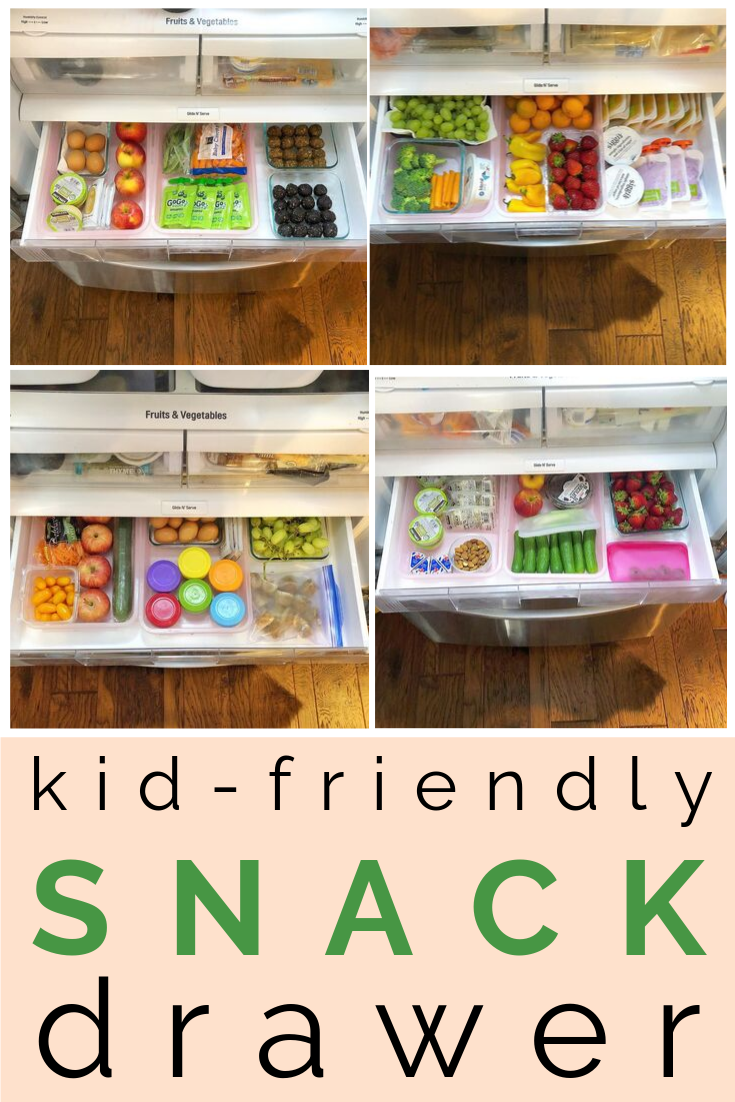
Right before our third child was born, I converted the lowest drawer in our fridge into a “snack drawer.”
Whether it was my parents helping with snacks, me feeding the big kids while juggling a newborn, or just needing something quick myself, we always had nourishing options ready to grab.er!
Want snack time to feel even easier?
Once you have a snack drawer set up, the next challenge is knowing what to actually put in it. My free Lunch Packing Cheat Sheet shows you exactly how to mix-and-match proteins, produce, and snacks so kids can grab balanced options without you overthinking it.
Creating a Kid-Friendly Snack Drawer
Kid-Friendly Snack Drawer 101
Our snack drawer simply brings a few good options front and center so I don’t have to overthink what to offer at snack time.
With kids, the hardest part usually isn’t the food — it’s the mental load of deciding what to serve. Keeping a mix of foods from different groups all in one place cuts down that decision fatigue and makes snack time feel easier for everyone.
Some families use a setup like this mainly for lunch packing, especially with older kids who pack their own lunches.
In our house, we use it for everything — morning snacks, afternoon snacks, and rounding out lunchboxes during the week.
Some of our favorite foods for the snack-drawer (by food group):
Veggies:
Baby carrots
Mini cucumbers
Bell peppers or baby bell peppers
Broccoli or cauliflower
Zucchini muffins
Carrot muffins
Fruits:
Apples
Applesauce
Oranges or clementines
Fresh berries
Grapes
Fats and/or Proteins:
Yogurt tubes or cups
Hummus cups
Guacamole
Greek yogurt ranch dip
Cheese
Hard boiled eggs
Energy bites
Starches
Muffin Club muffins
Banana avocado Breakfast Cookies
Leftover Pancakes
Granola-Based energy bites
What kind of fridge I have
We have an LG French Door fridge in 2015, but this seems to be the closest model currently available. We needed a shallow option to fit our space and yet I have been very pleased with how much space we have in it. For those curious or in the market for a fridge, you can view models similar to ours here (not sponsored; just sharing because we love ours and are asked about it often!).
*Update: As of August 2024, we have this model of fridge.
What kinds of containers do you use
I try to repurpose what we already have before buying anything new. Thankfully, a few shallow bins we owned fit perfectly and instantly turned this drawer into simple compartments.
If you want to recreate something similar — or just see the containers and storage pieces we personally use — I’ve rounded all of our favorites in one place here:
👉 Shop my snack drawer essentials on Amazon
That includes things like glass containers, reusable bags, small bins, and grab-and-go pouches that make storing and refilling snacks easy.
How to create the space in whatever fridge you have
A lot of you have said, “This is a great idea… but my fridge doesn’t have room.”
Totally fair.
The good news? You don’t actually need a special drawer — just a dedicated space.
Here are a few ways to make one:
Start with a clean slate.
Do a quick fridge clean-out and reorganize what you already have. Use bins or containers to group condiments, produce, proteins, etc. You’ll often find extra space just by consolidating half-used bottles or duplicates.
Consolidate where you can.
Maybe only two salad dressings are open at a time.
Maybe backups stay in the pantry until needed.
Small changes like this add up to surprising amounts of space.
Think “zone,” not drawer.
It doesn’t have to be an actual drawer. A bin, shelf, or cubby works just as well. The goal is simply one consistent spot you refill weekly with easy options.
Reassign what’s already there.
Our “snack drawer” used to hold meats and cheeses — which was way more space than we needed. So I moved those elsewhere and repurposed the drawer. Nothing changed about what we bought — just where we stored it.
Sometimes a simple shuffle is all it takes.
How is the snack drawer used (i.e. not abused)?
At the time of writing this, my kids are one, three, and five.
So no — they don’t have free rein on the fridge or this drawer.
For some families with older kids, this setup can support more independence as the Division of Responsibility naturally shifts with age. I have clients who use a snack drawer that way successfully.
But in our house right now, this drawer is mostly for my sanity, not unlimited access.
My kids have grown up with the Division of Responsibility, so they know I decide what, when, and where food is offered.
Does that mean they never ask for snacks outside of snack time? Of course not.
We’re not militant — just consistent. Loving boundaries and clear expectations go a long way.
Instead, the drawer simply gives me pre-selected, nourishing options to choose from. When snack time comes, I open it and quickly grab 2–3 items.
Our usual formula is simple: 1 produce + 1 protein (or fat)
That alone makes snacks more filling and balanced without much thought.
That looks like healthy snack combinations such as:
Carrots + Hummus
Apples + Almond Butter
Celery + Peanut Butter
Berries + Yogurt
Bell Peppers + Guacamole
Cucumbers + Cheese
Grapes + Energy Bite
Broccoli and Cauliflower + Greek Ranch Dip
Applesauce + Muffin
Oranges + Hard Boiled Eggs
These kinds of pairings help fill nutritional gaps and keep kids satisfied longer — instead of everyone defaulting to the quickest pantry snack.
We still use pantry foods sometimes, too. I just adjust based on the day.
If we have an early dinner or sports practice, I might keep snacks lighter.
If we’ll be out late, I’ll offer something more filling.
It’s not rigid — just intentional.
Other Commonly Asked Questions:
How do you keep your kids from binging on snacks?
My 4 & 6 year old would only eat snacks and never meals if I gave them access.
If you’re new to the Division of Responsibility, a snack drawer can actually feel more confusing than helpful at first.
Kids need to clearly understand that you decide what, when, and where food is offered.
If they think they can graze all day, it often backfires — appetite drops at meals and the feeding dynamic gets stressful.
In our house, we keep it simple:
When it’s not a meal or snack time, the kitchen is closed.
We reinforce that boundary kindly and consistently.
The snack drawer doesn’t change expectations — it just makes the options easier when snack time does come around.
When are they allowed snacks? Do they skip meals for this instead?
They eat from the drawer at scheduled snack times only.
Not in place of meals.
They still follow the same structure we’ve always had:
I decide what, when, and where. They decide if and how much.
The drawer just makes it faster for me to offer balanced choices — not unlimited access.
What age did you start?
This wasn’t about developmental readiness — it was about survival.
I started when my oldest was 4.5 and my middle was 2.5, right after our baby was born.
It helped grandparents, babysitters, and my husband quickly grab snacks without needing instructions.
As kids get older, you can involve them more in stocking or choosing — especially in the early adolescent years when independence naturally increases.
How long does the food last?
I usually fill it on the weekend and it lasts through Friday.
We try to eat the most perishable foods first (berries, cut veggies) and save sturdier options (apples, carrots, packaged items) for later in the week.
Any tips for keeping items fresh?
For photos, lids come off.
For real life, almost everything is covered.
Berries and grapes do best washed with a paper towel in the container and left uncovered.
Most other items — cut fruit, veggies, energy bites — go into reusable bags or sealed containers.
For very perishable veggies like cucumbers or peppers, I often just cut them right before serving.
Do you replenish during the week?
Sometimes.
If we run out and I remember, I’ll restock a few things.
If not, we simply wait until the next refill day.
It doesn’t have to be perfect to work.
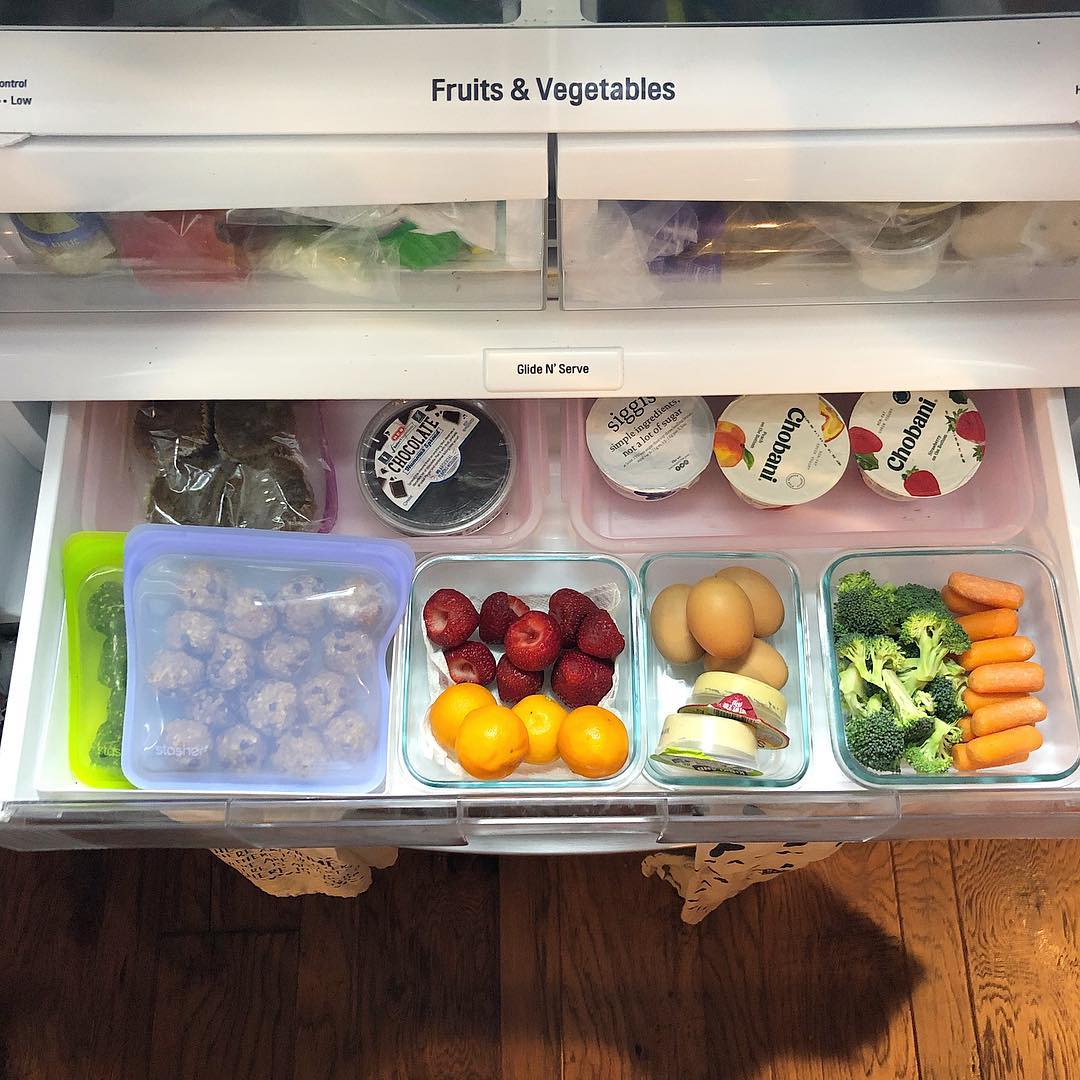
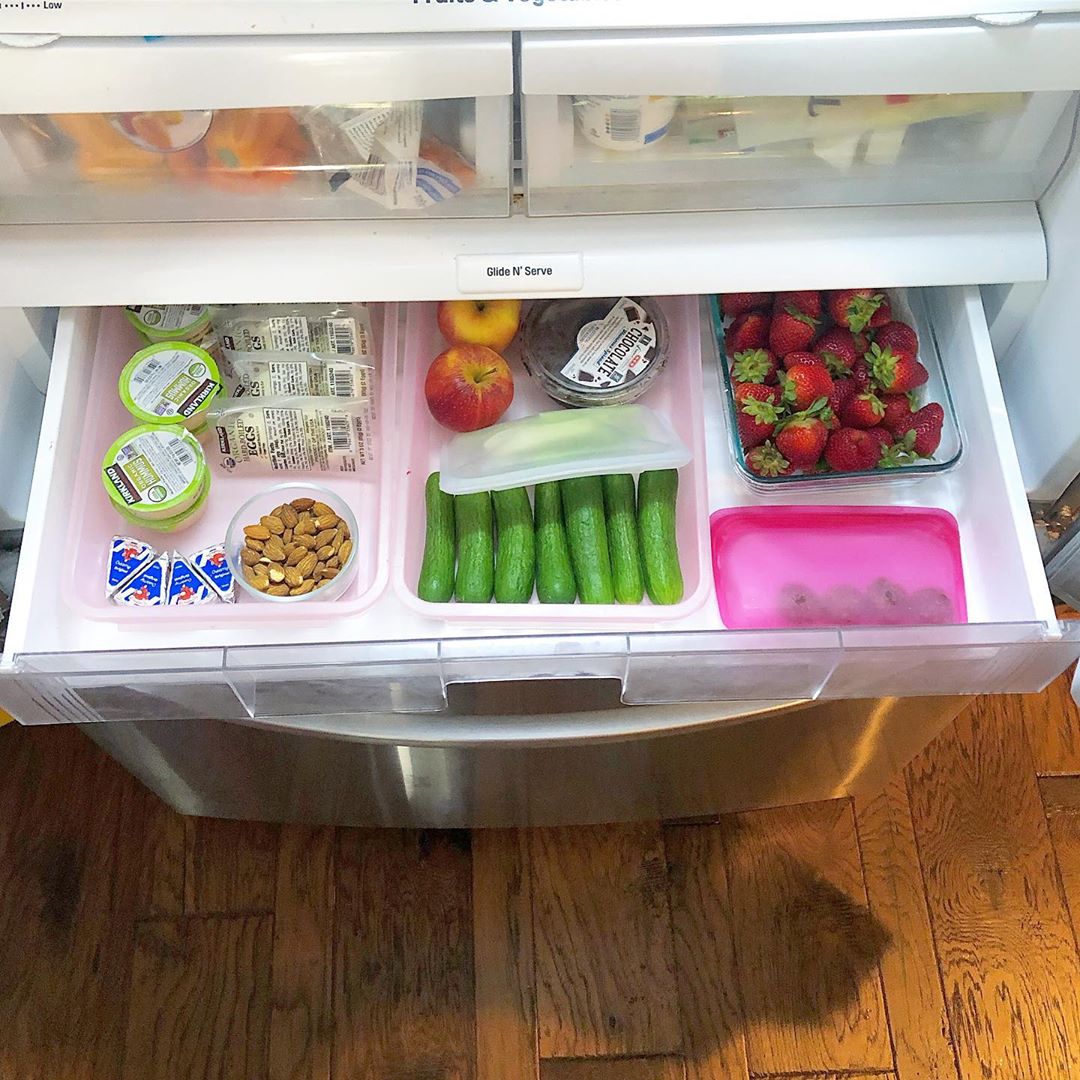
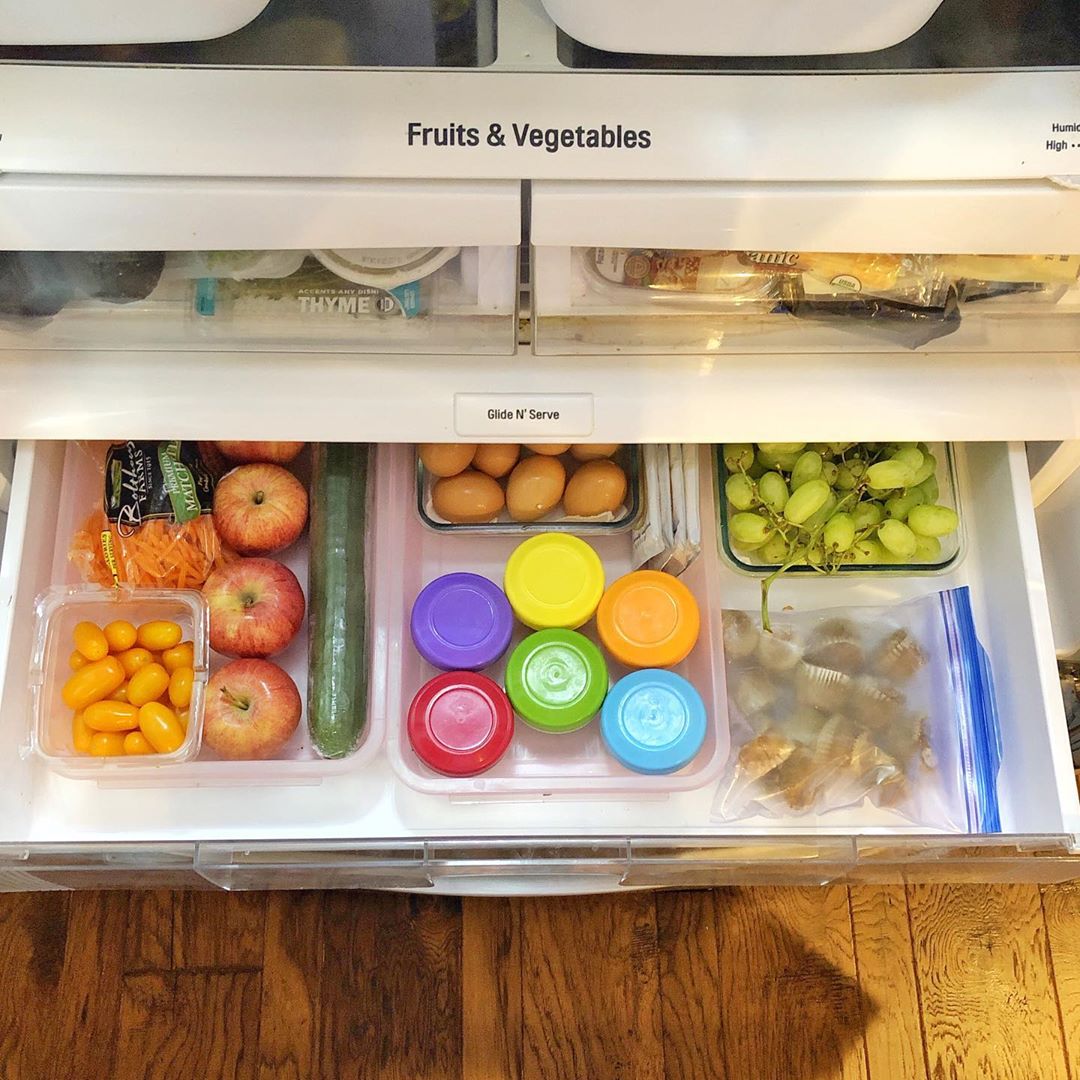
Want to see more examples of past Kid-Friendly Snack Drawers?
Scroll through those shared here:
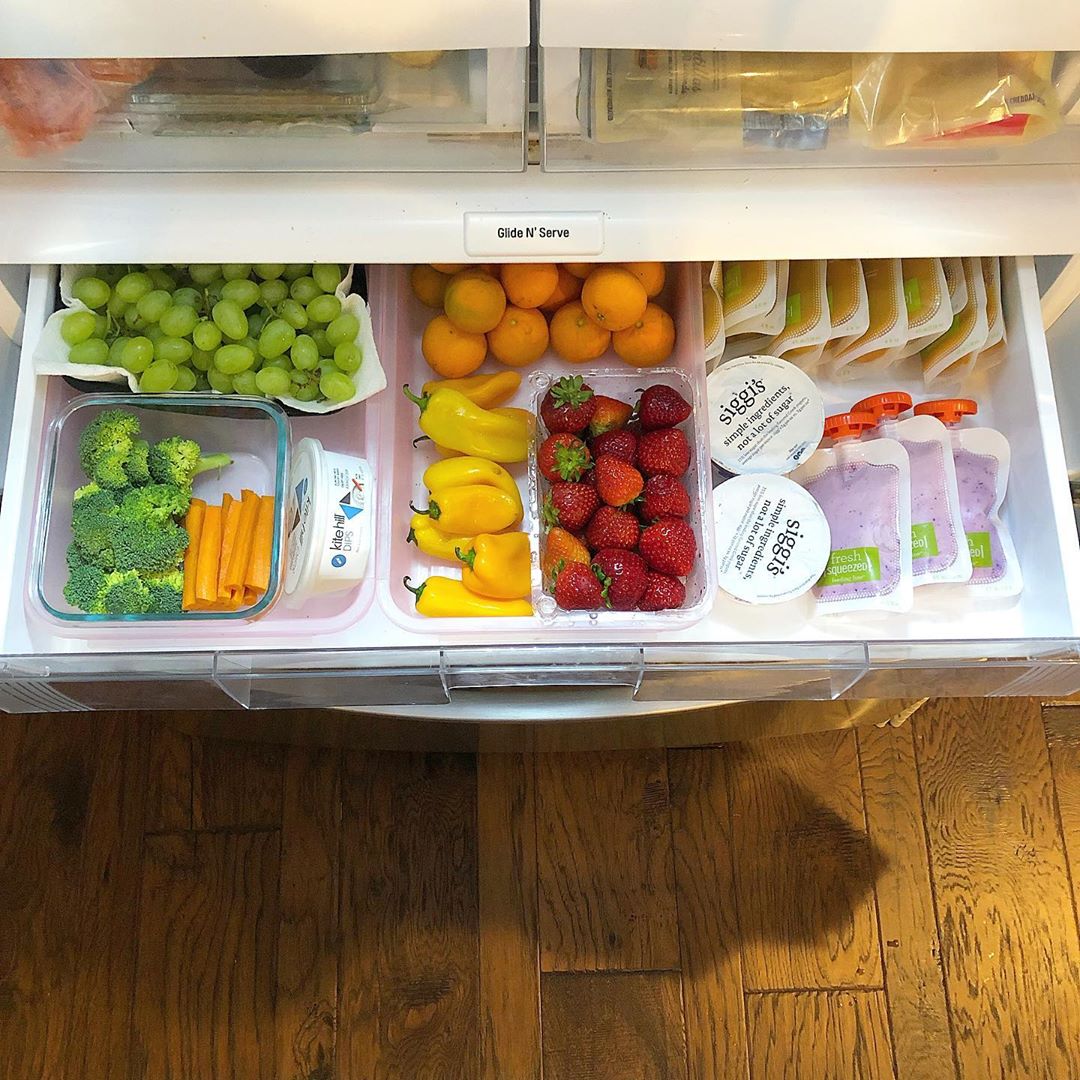
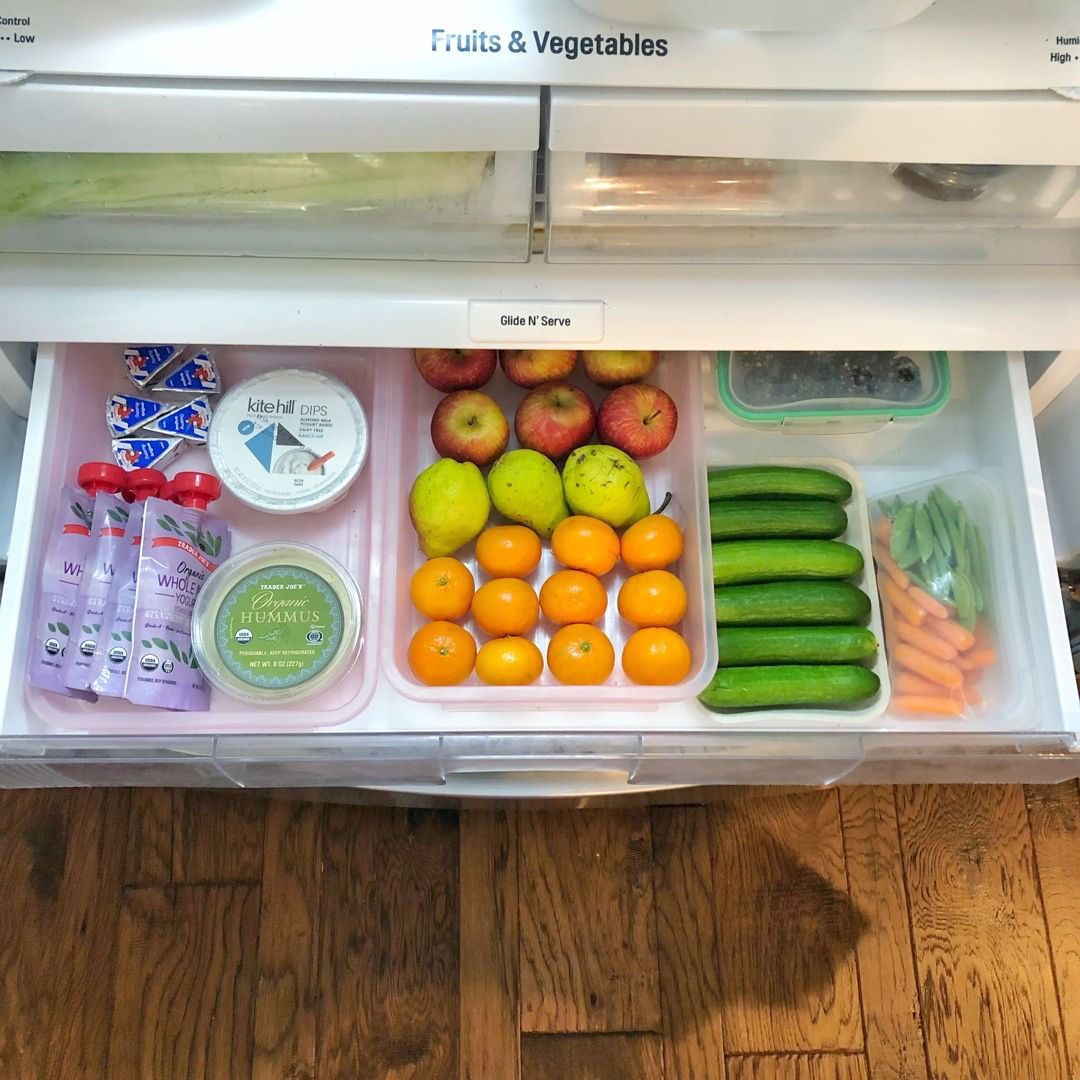
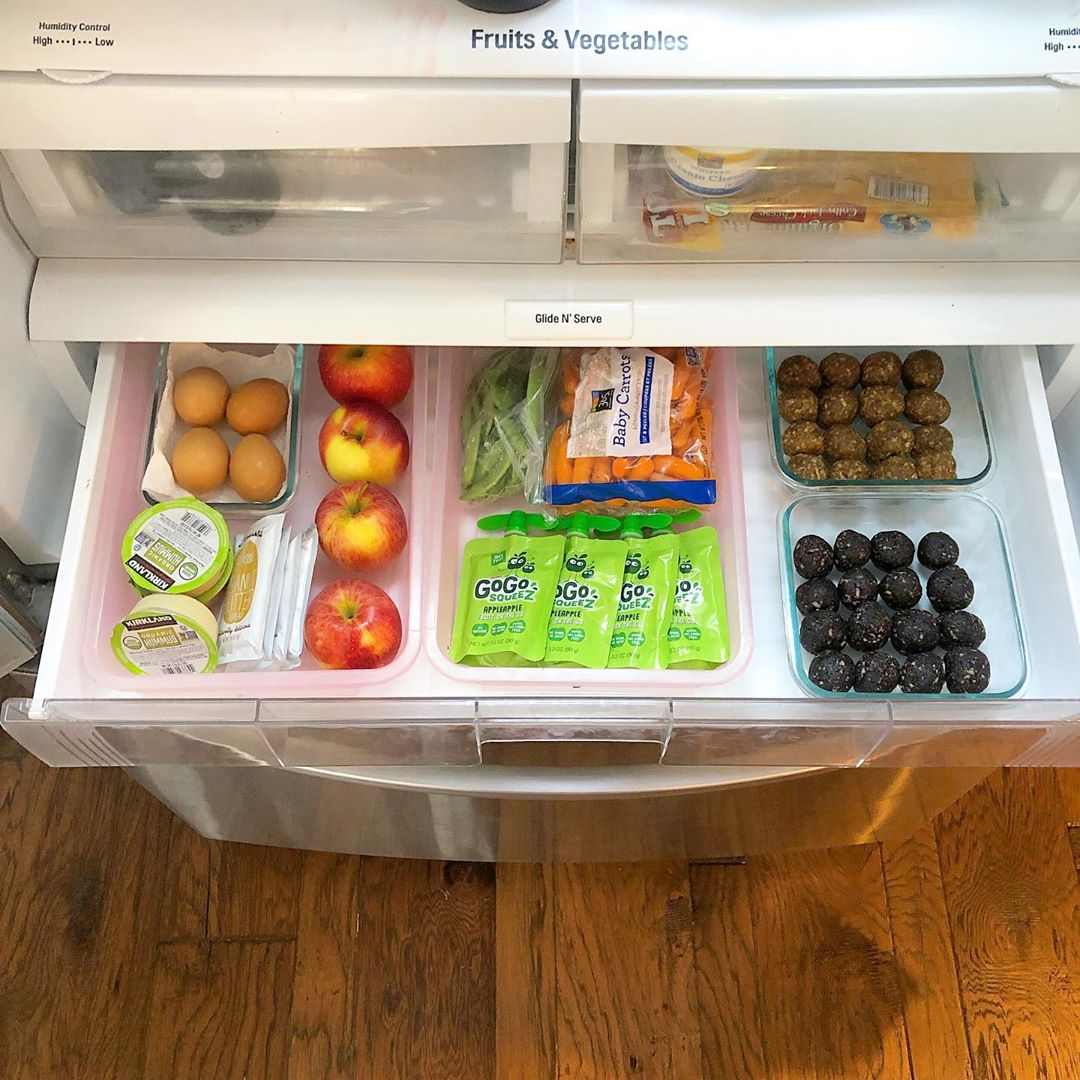
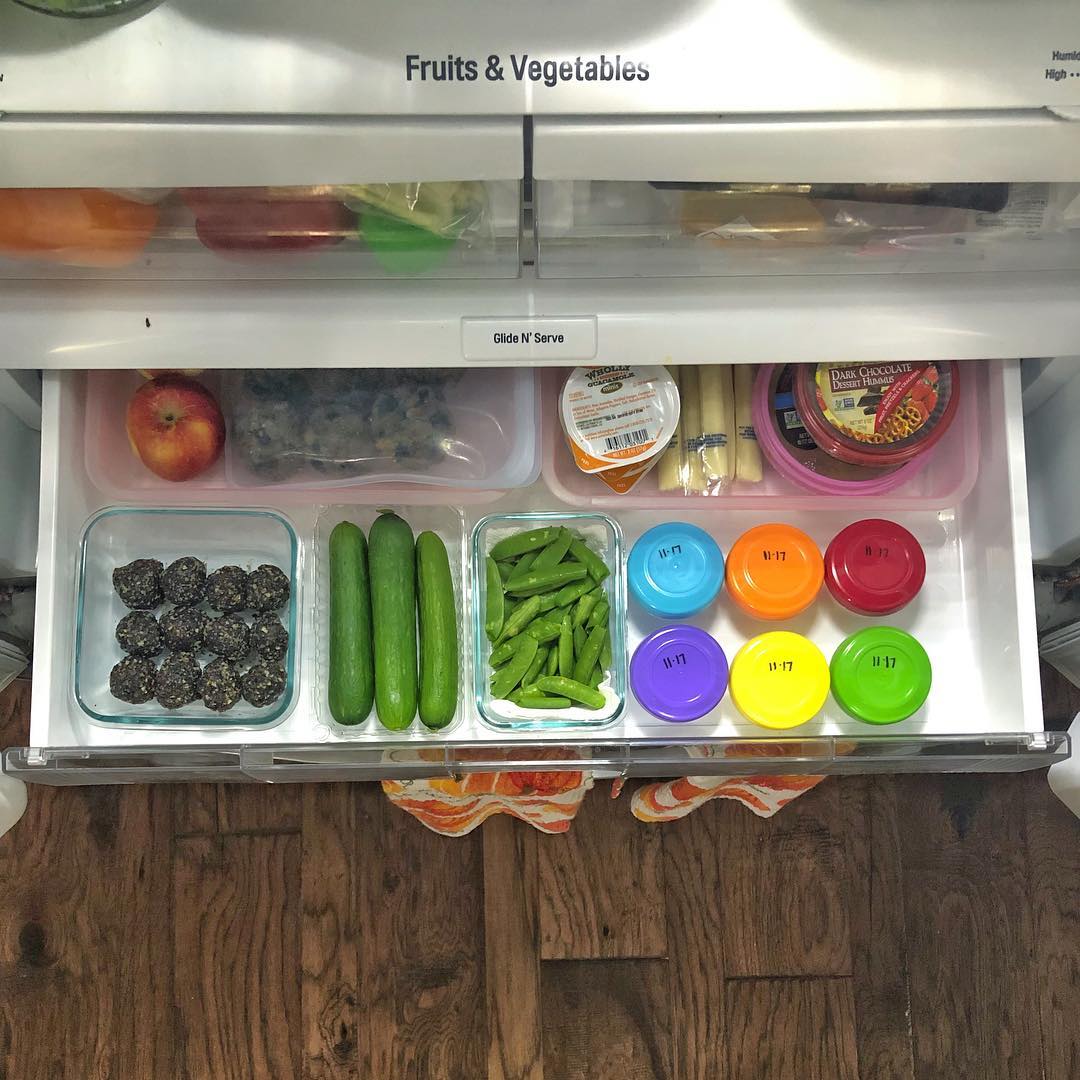
Want this planned out for you?
If you like having snack options ready to grab, my free Lunch Packing Cheat Sheet makes it even easier. It walks you through exactly how to mix-and-match proteins, produce, and snacks into balanced combinations — so you always know what to stock and serve.