Must-Have Lunch Packing Cheat Sheet
With the school year upon us, many families are getting ready to pack school lunches. To help simplify the process, I’m sharing my must-have lunch packing cheat sheet (free!) plus several other tips and tricks below. You can download the cheat sheet to help figure out what to offer, then use the other tools to do everything from meal planning to grocery shopping to communicating with your child’s teacher about how all foods fit.
Must-Have Lunch Packing Cheat Sheet
Do you have all your lunch packing supplies ready?
You can find all of my favorite products to send back to school here.
Once you have your lunch box and accessories ready to go, the next question is what to actually pack inside. That’s exactly what this post will help you accomplish.
What to include in a school lunch
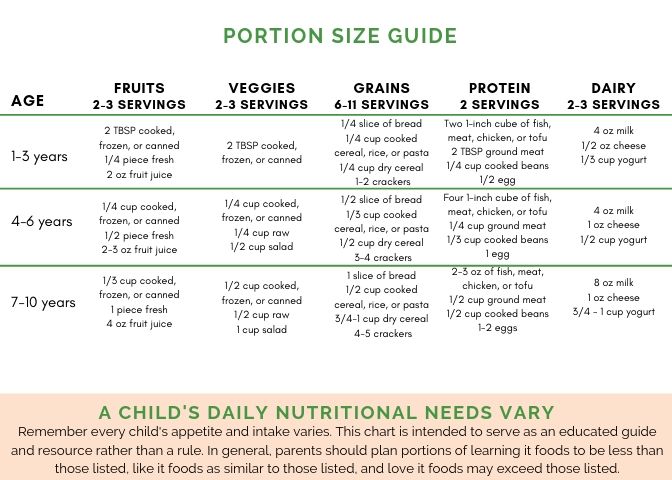
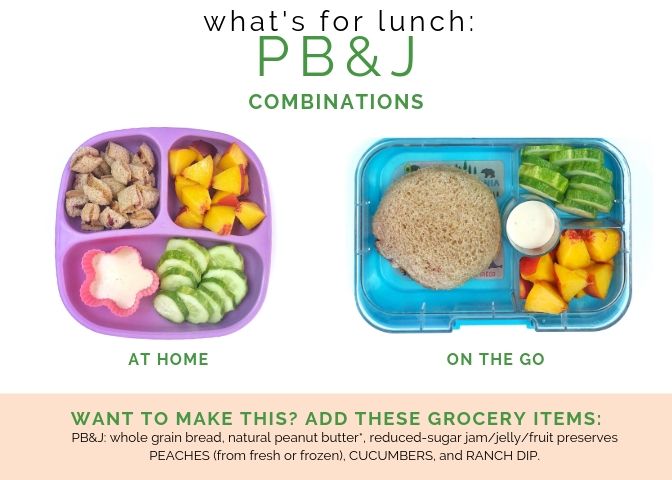
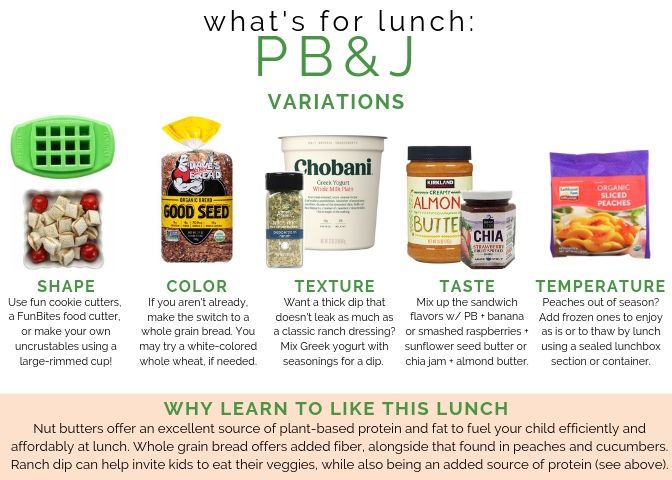
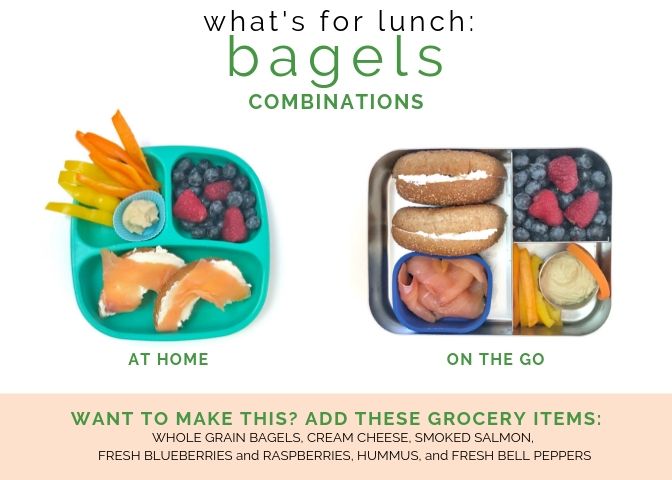
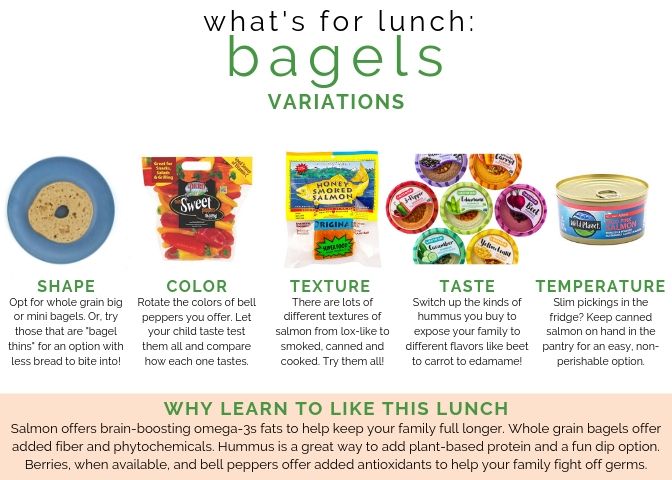
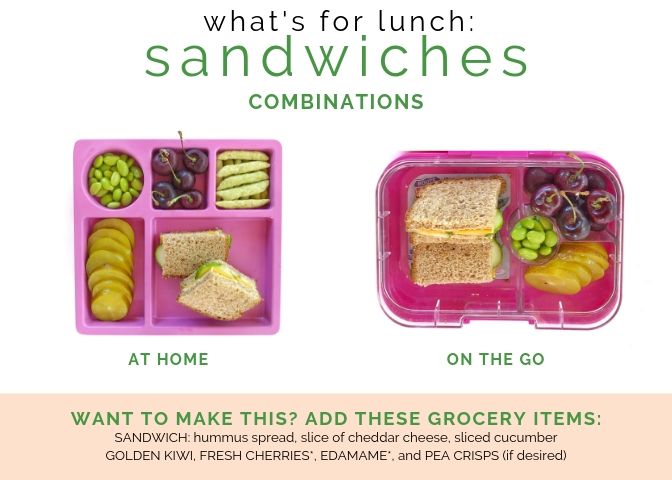
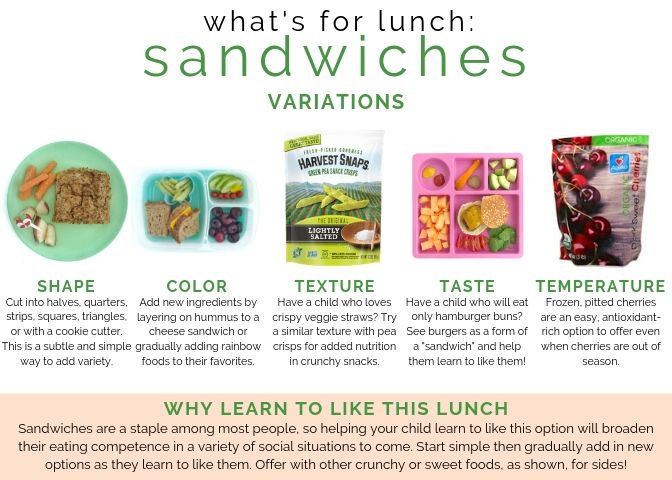
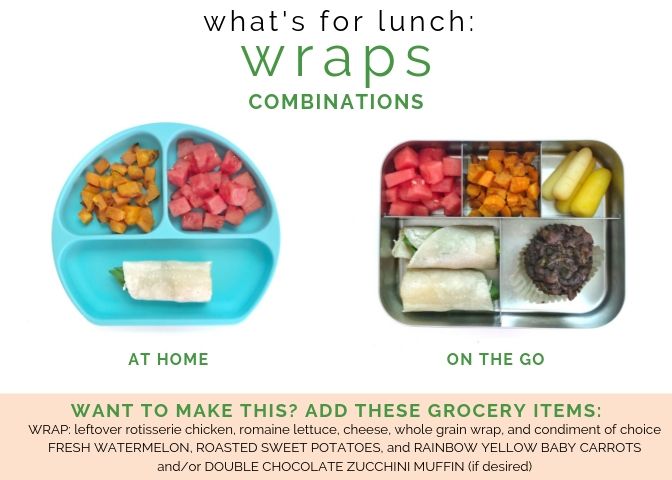
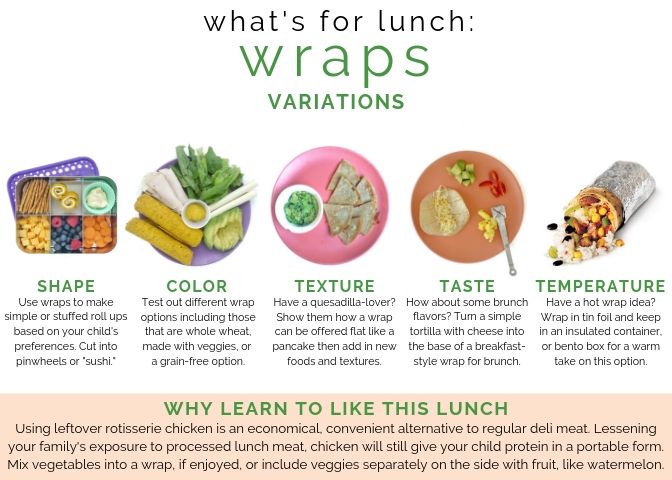
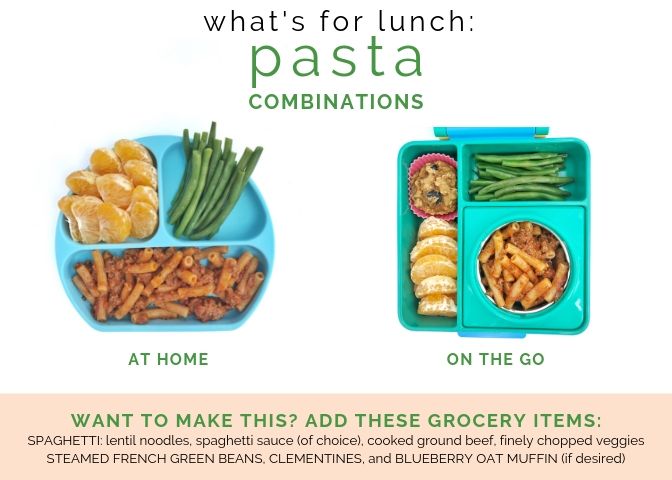
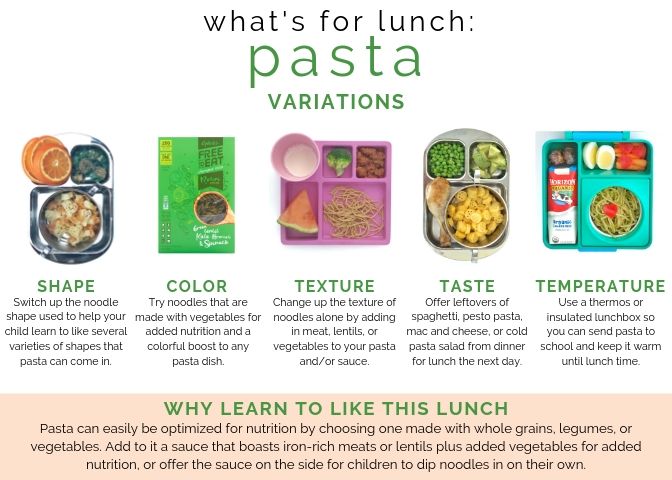
It’s easy to default to offering the same foods every day. Instead, try rotating through a variety of simple staples, as shown in my Combination Cards. By leveraging known favorites while gradually introducing new foods, you can expand what your child is willing to eat at lunch so they stay satisfied throughout the school day.
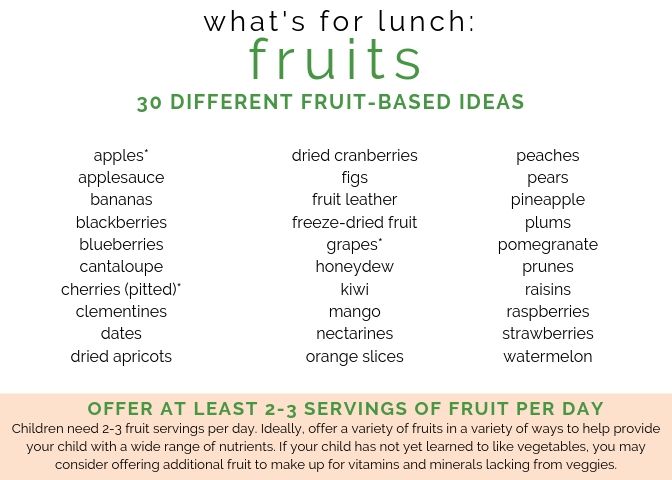
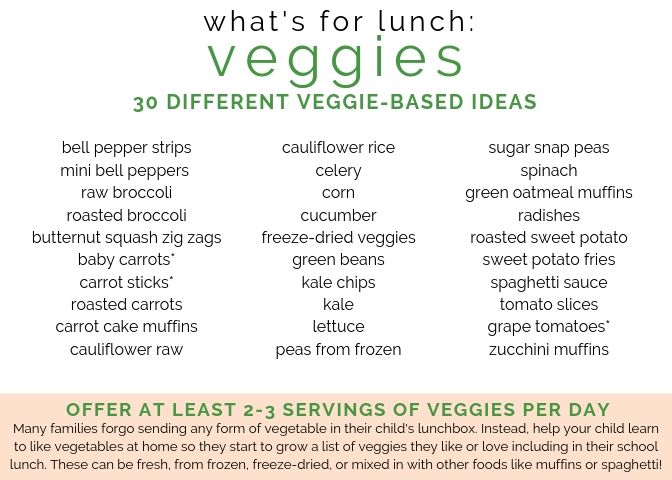
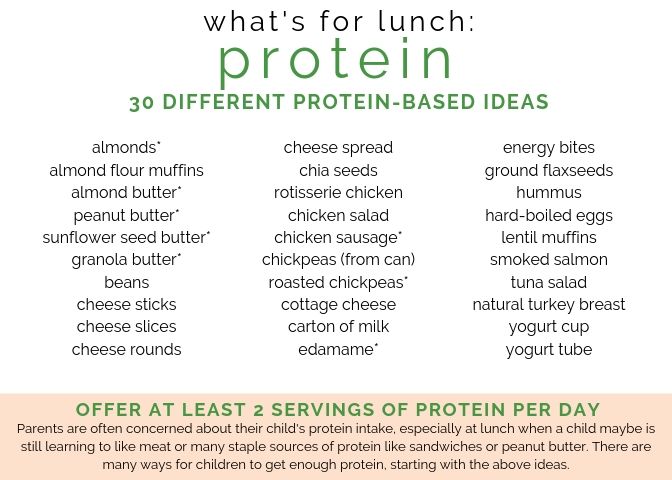
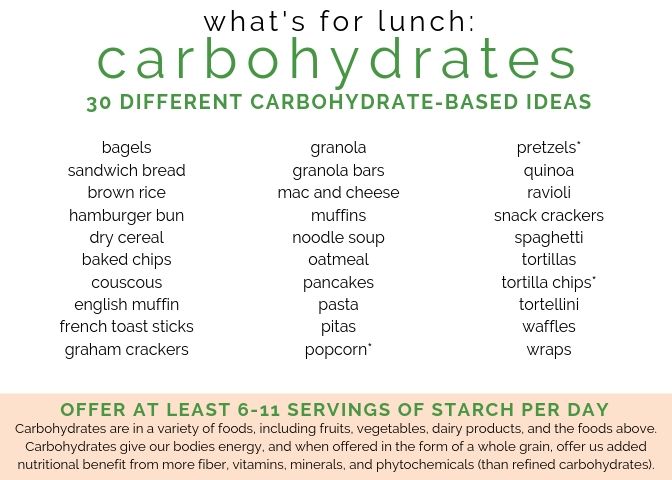
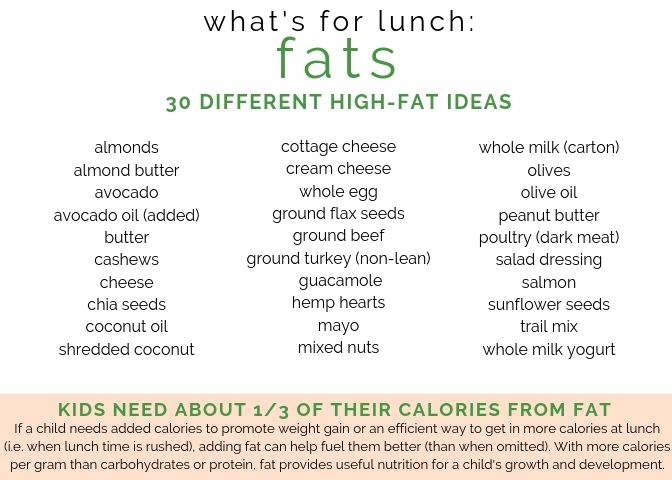
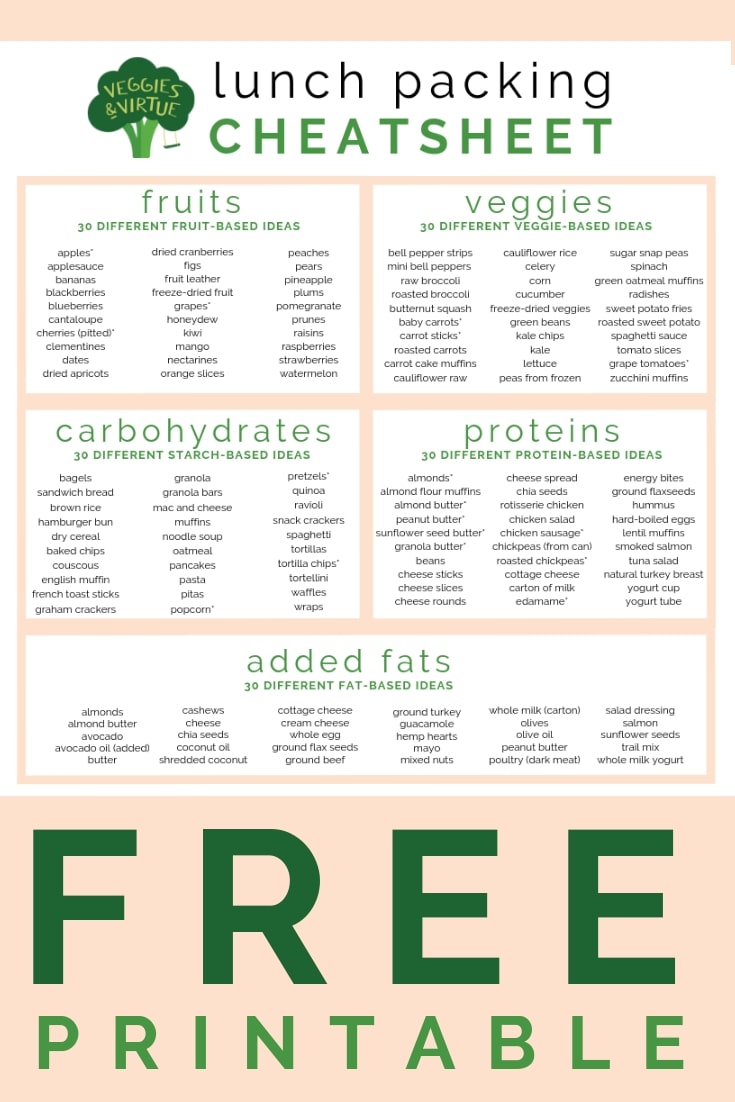
For easy drag-and-drop ideas of what to pack, use the free printable below. It includes one month’s worth of fruit, vegetable, protein, carbohydrate, and added fat options to both fill and fuel your child. Just print and post in your kitchen for quick, balanced lunch ideas to keep on hand.
What to avoid or limit in school lunches
It’s easy to default to offering the same foods every day. Instead, try rotating through a variety of simple staples, as shown in my Combination Cards. By leveraging known favorites while gradually introducing new foods, you can expand what your child is willing to eat at lunch so they stay satisfied throughout the school day.
For easy drag-and-drop ideas of what to pack, use the free printable below. It includes one month’s worth of fruit, vegetable, protein, carbohydrate, and added fat options to both fill and fuel your child. Just print and post in your kitchen for quick, balanced lunch ideas to keep on hand.
Download the lunch packing printable here
What to Avoid or Limit in School Lunches
While many foods can fuel your child well, there are a few that may need to be avoided altogether or limited in kids’ school lunches.
Avoid (pea)nuts
Check your child’s school policy regarding nuts. If needed, avoid all peanut-containing products. When allowed, alternatives like almond or cashew butter may be appropriate. For nut-free options, consider SunButter or Granola Butter spread thinly on sandwiches, crackers, or celery.
For more peanut-free ideas, visit this post.
Modify choking hazards
Depending on your child’s age, some foods need to be modified due to choking risk (especially under age 4). Because teachers cannot monitor every bite, use your best judgment and adapt foods according to your child’s developmental stage.
Potential choking hazards include:
Hot dogs
Nuts and seeds
Chunks of meat or cheese
Whole grapes or cherry tomatoes
Hard or sticky candy
Popcorn
Thick spreads of nut butter
Raw vegetable chunks
Apple chunks
Limit foods with little nutritional value
Kids often have limited time to eat lunch at school, so prioritize foods that provide meaningful nutrition. While treats or snack crackers can be included occasionally, consider how these choices impact your child’s overall intake.
Some children may focus on these foods first in social settings, while others receive mixed messages if caregivers enforce eating “healthy foods first.” Decide what works for your family and pack accordingly.
A Rule of Thumb
The goal is to offer:
A fruit and/or vegetable + carbohydrate + protein + fat source
Including a variety of nutrient-dense options helps fuel your child for learning, growth, and play.
Not sure how to put that into practice day after day?
Grab the free Lunch Packing Cheat Sheet — 30 mix-and-match ideas from each food group so you can build balanced lunches in seconds.
You can also explore my Combination Cards for ready-made balanced lunch ideas.
How to Plan and Pack Ahead
Routines make school mornings smoother for everyone.
Decide if your child will buy or bring lunch
Most schools publish lunch menus online. Review options together weekly or monthly to decide which days to pack versus buy. Some children eat more variety when buying lunch, while others do better bringing food from home.
Plan what you will offer
Use Combination Cards or the printable cheat sheet to assign themes (e.g., sandwiches on Monday, leftovers Tuesday, wraps Wednesday). Planning ahead reduces decision fatigue and increases variety.
Pack lunches the night before
Packing ahead saves valuable morning time. Children can help choose items by selecting from the food groups on the printable. Allow enough time for them to be involved in decisions.
Create a snack drawer
Designate a pantry bin or fridge drawer with approved snack options. This empowers children to independently choose items for their lunch within boundaries you’ve set. Read more on, Creating a Family-Friendly Snack Drawer.
Help your child navigate school lunch choices
If your child buys lunch, this resource by Jill Castle offers guidance for making balanced choices.
Questions to Ask During the First Weeks of School
Asking questions about lunch time, particularly as your child gets into the routine of a new school year, will help you learn more about their meal time dynamics while at (pre)school. If lunches come home uneaten, curiosity (not assumptions) helps uncover why.
Try asking:
Tell me about lunchtime. Where did you sit?
Who did you sit with?
Did lunch feel rushed or relaxed?
Was anything difficult to open?
What looked especially yummy around you?
I noticed you ate your ___ but not your ___. What happened?
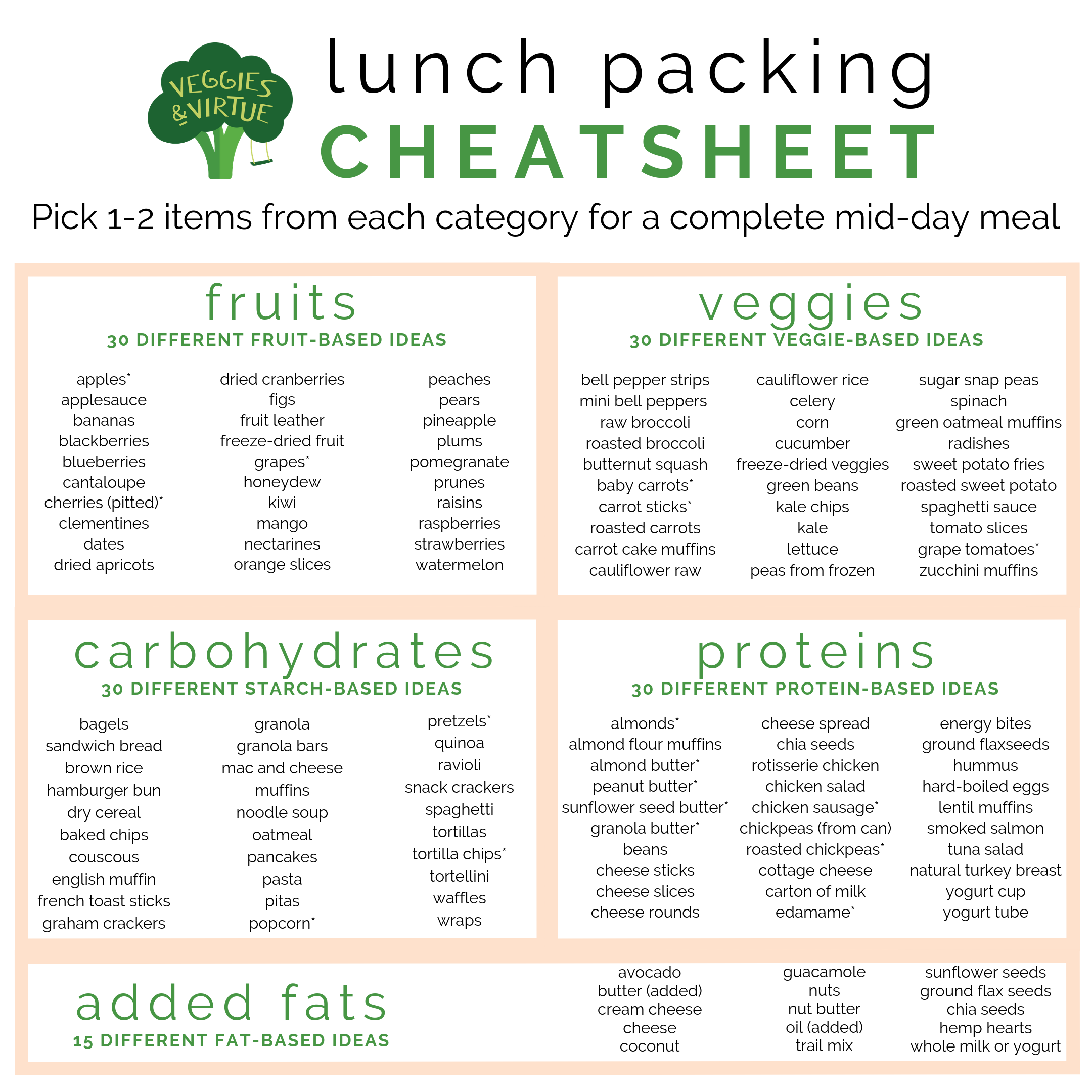
Don’t leave without grabbing your free printable!
Perfect for posting on the fridge so you or your child can build nourishing lunch combinations quickly.
When Schools Use Different Feeding Philosophies at Lunch
Many schools encourage students to eat “brain foods first,” asking them to finish healthier items before preferred foods.
While this approach does not align with the Division of Responsibility, educators often feel pressure to ensure children eat something.
If this happens at your child’s school, you might:
Talk with your child
Explain that lunch fuels learning and practice opening containers at home. If time is an issue, remind them eating comes first during lunch and socializing can happen at other times.
Talk with your child’s teacher or school
Some teachers are open to alternative approaches. A respectful conversation can clarify expectations and advocate for your child’s needs. Resources from the Ellyn Satter Institute or The Feeding Doctor (like this lunchbox note) may be helpful to share if appropriate.
Participate in school wellness efforts
Joining or supporting a wellness committee can help improve policies around snacks and lunches over time.
Need more lunch inspiration?
Click the images below for the digital download of Combination Cards - Lunch Edition.