
A Parent's Survival Guide to Having a Kid in a Full Leg Cast
A special thanks to Regalo for partnering on this post. As always, all opinions are my own. This post also includes affiliate links to Amazon. While these do not cost you more to use, they help provide Veggies & Virtue with a small commission to support my ongoing efforts and mission.
Many of you might remember this past March when my four-year-old very innocently (and far too easily) broke her leg while jumping on a trampoline.
It was one of those parenting moments where everything changes instantly.
One minute you’re fine.
The next you’re in the ER wondering how you’re going to manage everyday life for the next 4–6 weeks.
While accidents happen, what caught me off guard wasn’t just the injury — it was how many simple daily routines suddenly felt complicated.
Meals.
Movement.
Rest.
Basic logistics.
So after walking through this season ourselves, I wanted to gather what actually helped us and create this survival guide for any parent who might find themselves in the same situation.
Here's to safe childhoods, healthy kids, and yet adaptable, optimistic approaches to all that parenthood throws our way!
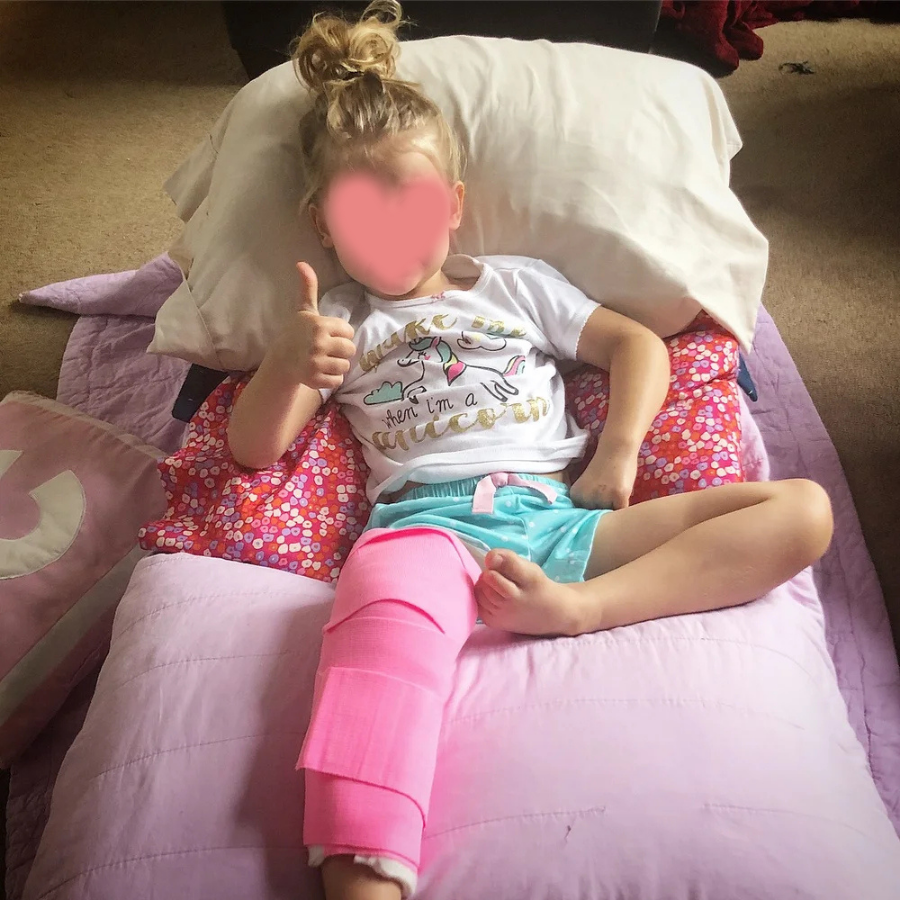
A Parent's Survival Guide to Having a Kid in a Full Leg Cast
1. Addressing Immediate Needs
When we came home from the ER, our house wasn’t set up for a child who couldn’t easily walk.
So we quickly adapted.
My husband was going to be on a work trip and I was well into my second trimester with our third child, so I knew I needed to come up with some simple solutions to avoiding carrying our daughter up and down stairs several times a day and allow us to temporarily live predominantly on the first floor.
Here are a few simple changes I made to our environment that made things work more smoothly while we got settled:
A comfortable and yet central resting place (we put out our Regalo My Cot in the middle of the living room)
Loose, comfortable clothing (that could fit over the splint/cast)
A lovey/stuffed animal (we took one to the ER that stayed with her nonstop for comfort the first week)
Favorite, low-mess snacks (to be eaten from comfortable resting place)
Movies and other no-movement-needed entertainment like books and the iPad
A plan for pain management
Wipes and disposable cloths (since hand washing and baths are more burdensome)
2. Supplies for Survival and Sanity
At first, we were fully in survival mode. Screen time limits loosened, pajamas stayed on longer than usual, and snack rules became more flexible — sometimes snacks were simply what made medication or hard moments possible. As the initial shock passed and we settled into life with a splint and then a cast, it became clear that this wasn’t a short-term disruption. We were in a four-to-six-week season, and having a few dependable essentials would be key to preserving both our routines and our sanity.
My Cot

We received a Regalo My Cot over six months ago and have enjoyed it in several applications since. The girls love to play with them, build forts with them, and put them out for movie night, but never have they proved as practical and useful as when my oldest broke her leg.
Low to the ground and an easy option to put out or move about, our My Cot was a comfortable place our daughter contently rested often while in her cast. I appreciated I could easily lift her on and off of it, and eventually when she was able to move more, it was the most appropriate resting place for her to lift herself on and off of. I also appreciated that it had a fitted sheet (unlike our couch cushions), so that my daughter could eat and drink on it without me having to worry about the mess.
I truly found it more helpful than I had ever imagined when we were in this situation and would genuinely recommend it as something that repurposed to serve us in this season so well. For anyone wanting to send a gift to someone who just broke their leg, this item is one of those things parents may not think in the moment of but would greatly find use for.
Breakfast in Bed Style Tray
Our girls love doing breakfast in bed on holidays, so having this easy to wipe down and store tray proved extra helpful during the many meals we ate around my daughter on the floor. Since she couldn’t sit in a normal chair at the dinner table very comfortably, we set up family picnics on the ground and allowed her to use this to prop her plate up and balance it over her lap while sitting up on her My Cot.
Large Blanket for Family Picnics
Sometimes you just have to adapt, and that’s exactly what we did when it came to meal times. It didn’t feel right to have my daughter eat alone on her cot while we all sat at the table, so we used a large blanket spread out in the living room to all sit on at meal times. The three of us either used the coffee table or the ground for our plates, while my oldest was able to gather around with us using her tray+cot combo.
Toys
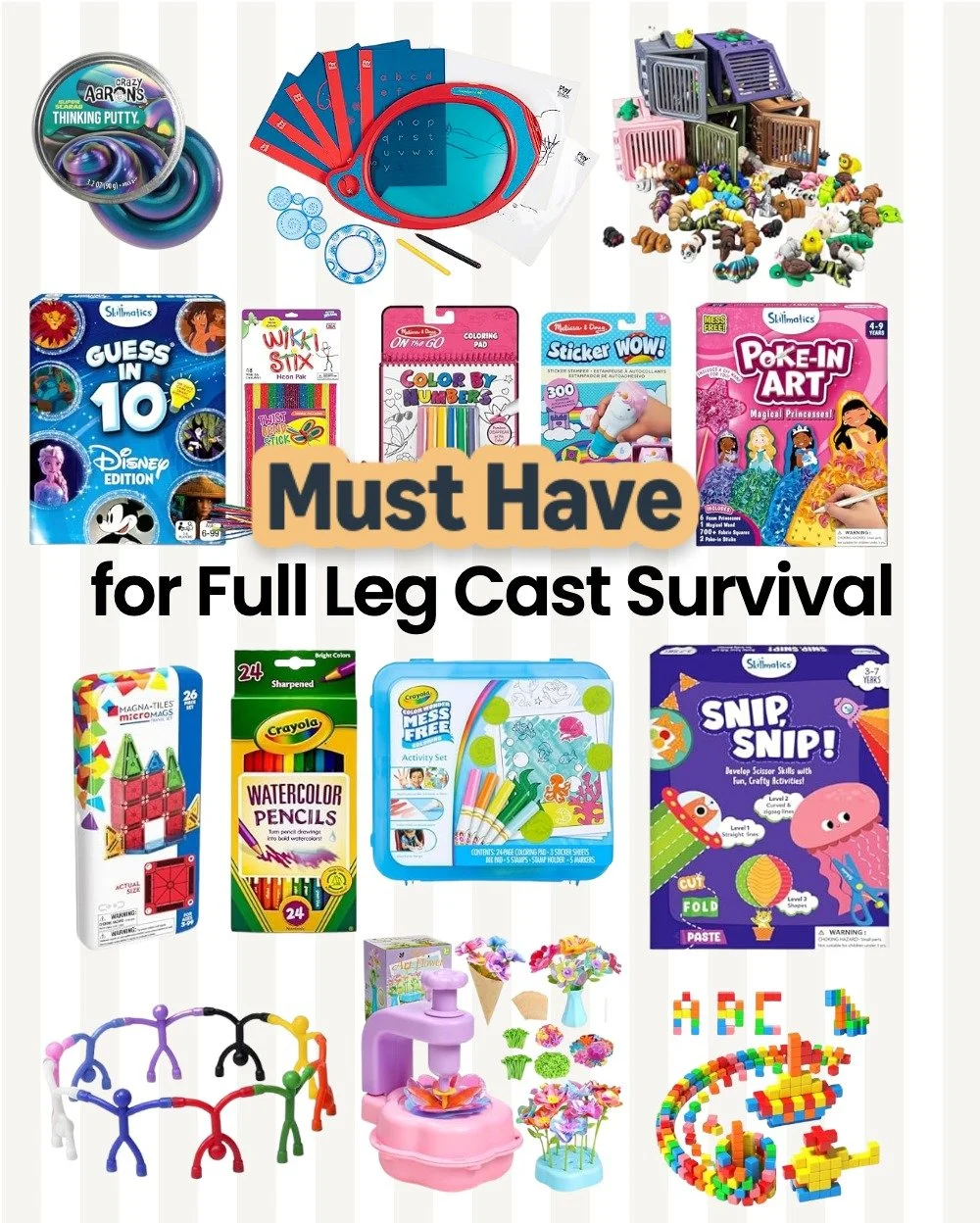
Any no-mess, imaginative toy here is golden. Depending on the age of the child who was injured, there are a variety of ideas to help keep them entertained. In short though, think of those that are low-mess and require little to no movement from the child (i.e. kneeling to push or play with). We found these toys especially fun for keeping my daughter occupied and entertained when she couldn’t get up and play.
*You don’t need to go buy a bunch of new toys. Many people were thoughtful to want to help an dgenerous to drop off or mail little gifts that my daughter could play with sitting down. These were some of her favorites!
Games
Cards, Zingo, Candy Land, Connect 4 — easy wins for connection without screens. See our favorites here.
Double stroller
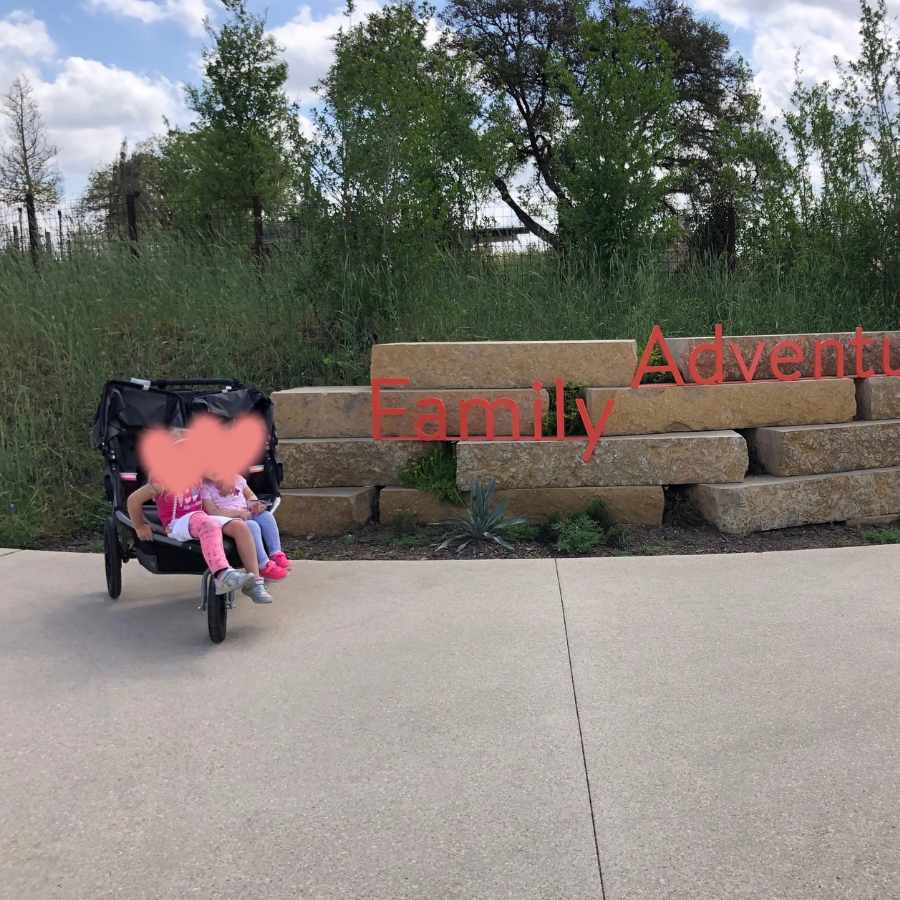
Nothing makes a family stir-crazy like not being able to let your child play outside during the start of Spring. To curb these feelings of being on house arrest, we took daily walks with the double stroller. We love and constantly use this one. It allowed us to not only get out and enjoy fresh air but also to see neighbors and have a change of environment without expecting anywhere to be conducive to a child in a cast.
3. Make Meals Easier (not harder)
One thing I didn’t expect?
How complicated meals suddenly felt.
Getting up and down from chairs was hard.
Carrying plates was tricky.
Sitting at the table wasn’t always comfortable.
So instead of fighting it… we adapted.
We started doing:
“picnic style” meals
tray meals
easy finger foods
simple, packed-style lunches she could eat wherever she was perched
Honestly, this was a lifesaver during recovery.
💛 A small thing that helped a lot
If your child can’t easily come sit at the table right now, packed-style meals can be so much simpler.
Think easy-to-carry, mix-and-match foods that work on the couch, cot, or floor.
I made a free Lunch Packing Cheat Sheet that shows exactly how to throw these kinds of meals together in minutes. It’s perfect for busy or off-routine seasons like this. This also helps you to get one thing off your plate and plan lunchboxes ahead of time so that when everything feels a bit harder, lunches (or any meal packed up, really) can be simpler and ready to go.
👉 Grab the free cheat sheet here
4. Steps to Recovery
We were lucky.
I know many children with full leg casts aren’t able to bear any weight at all — which is actually what we were first told to expect. Thankfully, my daughter’s cast left her foot exposed, and the doctor said she could walk on it… when she was ready.
I assumed that meant she would just get up and go.
Technically, she was allowed.
Technically, she was able.
But emotionally? She wasn’t ready at all.
It was a much bigger hurdle than I expected to get her to put weight on it — let alone actually walk. And if I’m honest, as a pregnant mom already exhausted, the added time and lifting and coaxing felt like a lot some days.
Recovery wasn’t linear. It wasn’t quick. It required way more patience (for both of us) than I anticipated.
But there were a few things that genuinely helped us move forward, slowly and safely, with our doctor’s blessing.
(As always, follow your child’s medical team and what’s appropriate for their unique recovery.)
Patience
This season just takes extra patience.
Whether it was encouraging her to try one step… or attempting to sponge bathe her without soaking the cast… everything felt slower and more complicated than usual.
On the hard days, I tried to zoom out and remember how temporary this was. A quick scroll past families facing far heavier diagnoses always helped me reset my perspective and remember: this was inconvenient, yes — but still something we could handle together.
That mindset helped me soften instead of rush.
Practice Crawling
I wish I could remember who suggested this so I could personally thank them.
Encouraging her to crawl before expecting her to walk was a game-changer.
Not only did it save my back from carrying her everywhere, but it gave her confidence back. She realized, “Oh… I can still move. I’m not stuck.”
Watching her crawl herself across the room to grab a toy or reposition herself felt like such a small win — but emotionally, it was huge.
Climbing up onto Things
Our My Cot became our BFF.
It was low enough that she could practice getting on and off independently, which gave her a safe middle ground between being carried everywhere and climbing onto full-height furniture.
Helping her learn how to climb → crawl → scoot up onto things rebuilt her confidence little by little. You could almost see her independence coming back in real time.
"Do Laps"
The irony still makes me laugh.
She broke her leg on a trampoline (not ours)… yet we literally have a trampoline sitting in our formal dining room — because who really uses a formal dining room with kids anyway?
It ended up being the perfect rehab tool.
She’d hold onto the trampoline with one hand and me with the other, and we’d slowly “do laps.” Sometimes one circle. Sometimes ten. Sometimes none at all.
First hopping.
Then tiptoeing.
Then tiny steps.
Eventually walking.
It wasn’t physical therapy — it was just play. And somehow that made it less scary for her.
Offer Something that is an Incentive to Move
Nothing motivated her like a friend.
When it was just our family, she was perfectly content being waited on (can’t blame her). But the moment a friend came over and said, “Come play with me,” something shifted.
She wanted her independence back.
Having one friend at a time — low pressure, low chaos — was the sweet spot. It gently encouraged her to move more without it feeling forced or clinical.
And honestly, it lifted her spirits just as much as it helped her mobility.
In Summary
This season isn’t easy.
But small adjustments — simpler meals, flexible routines, and a few helpful tools — go a long way.
If this post helps even one family feel a little less overwhelmed, it’s worth sharing.
You’ve got this ❤️
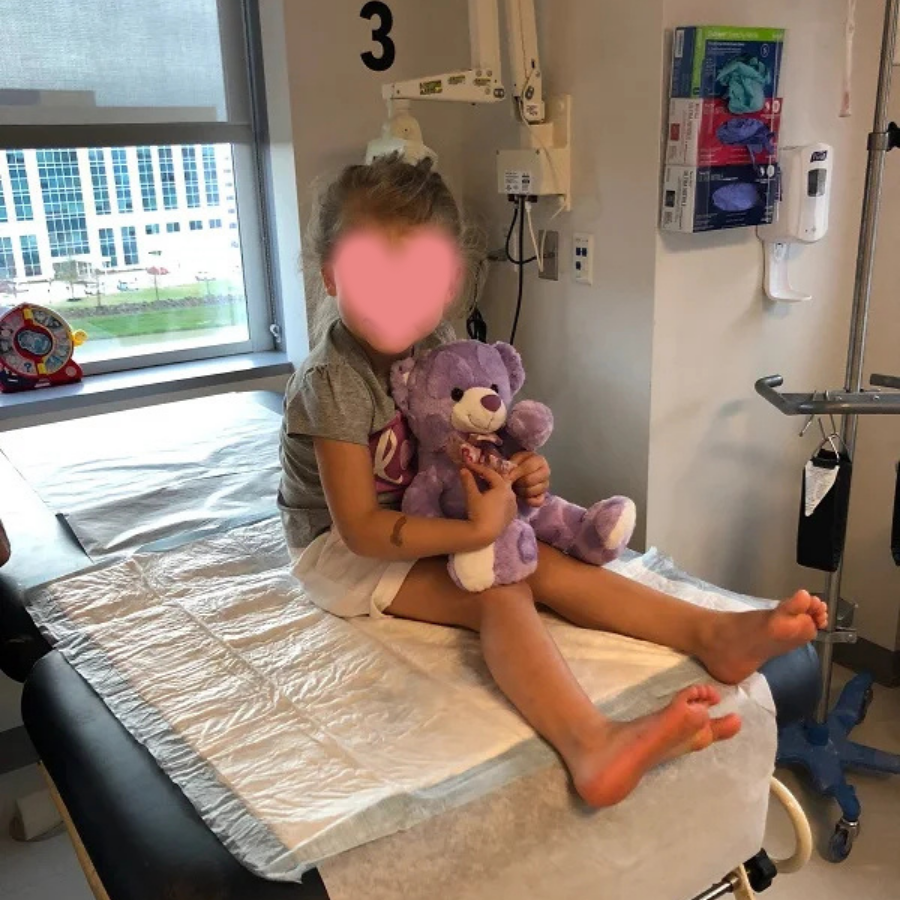
Getting her cast on

First signatures

Getting her cast off